
Description
Product Overview
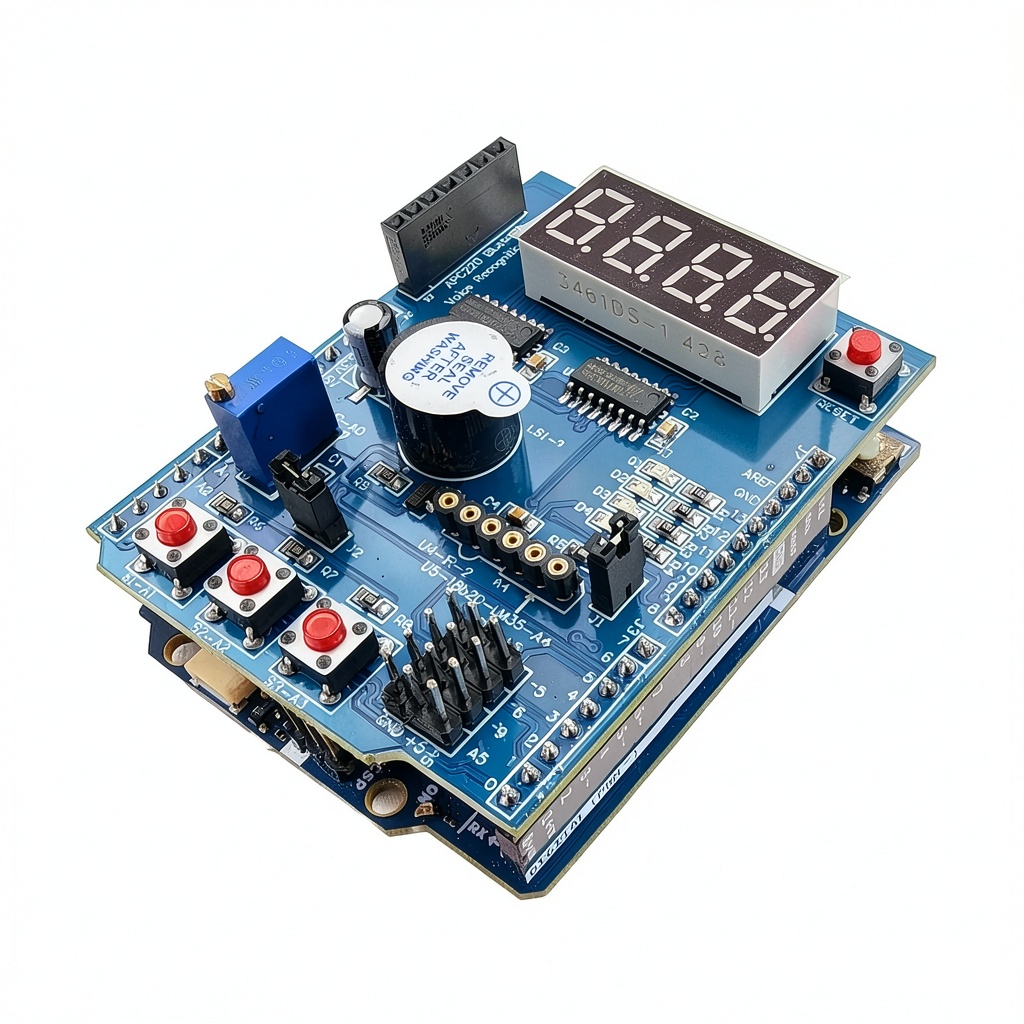
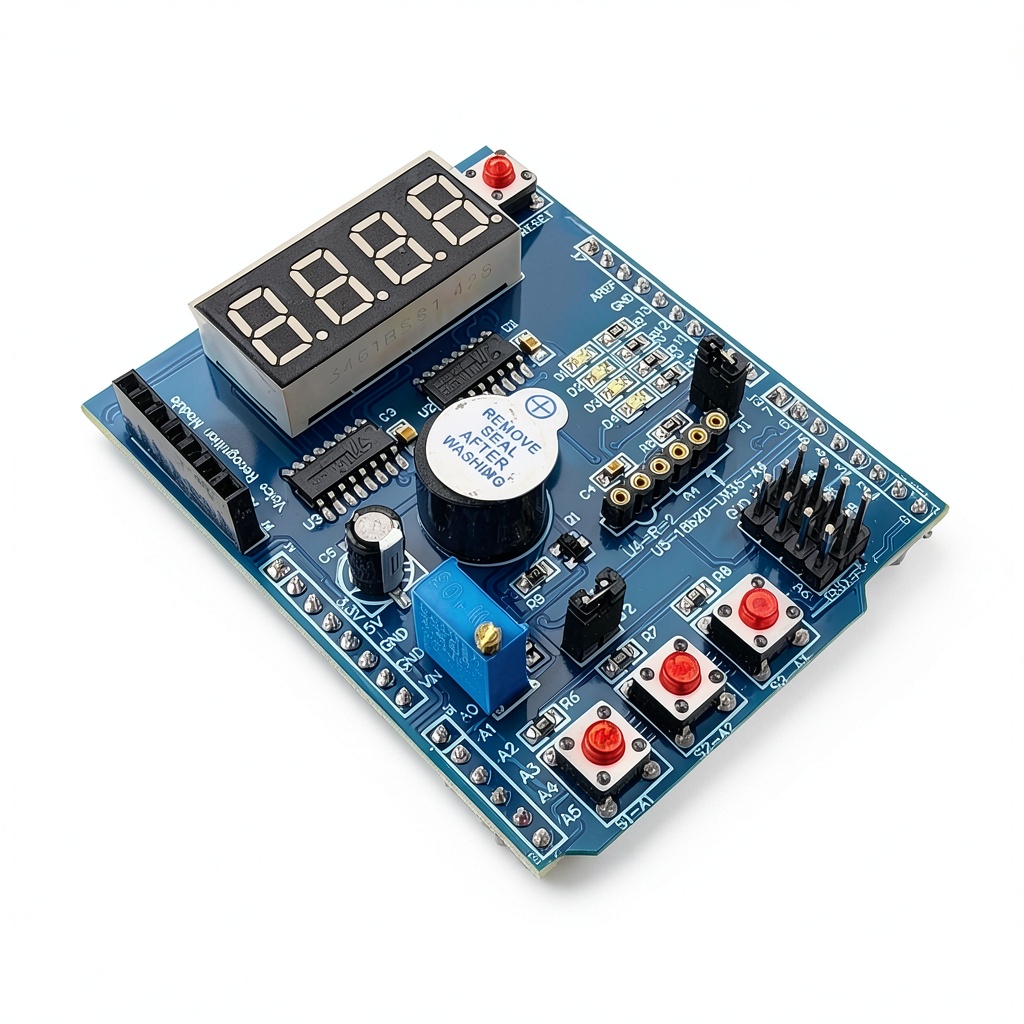
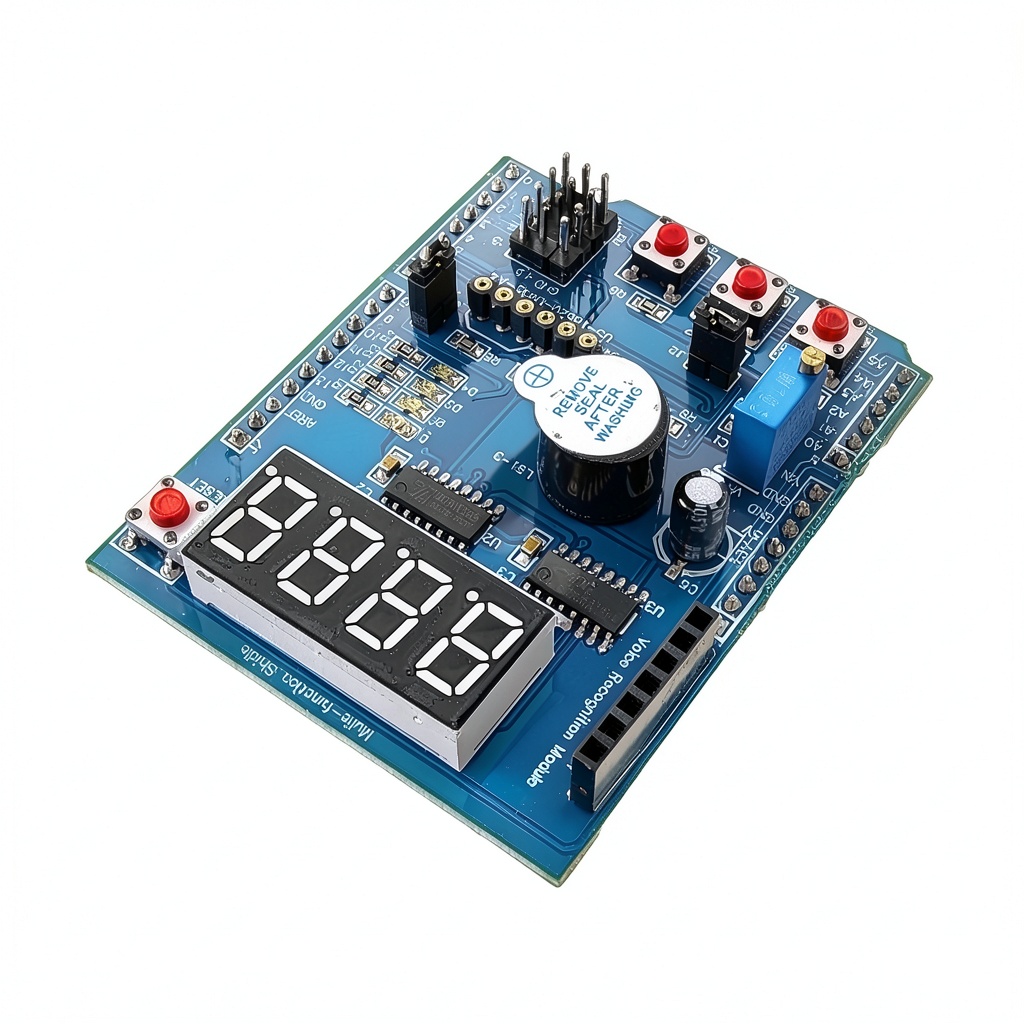
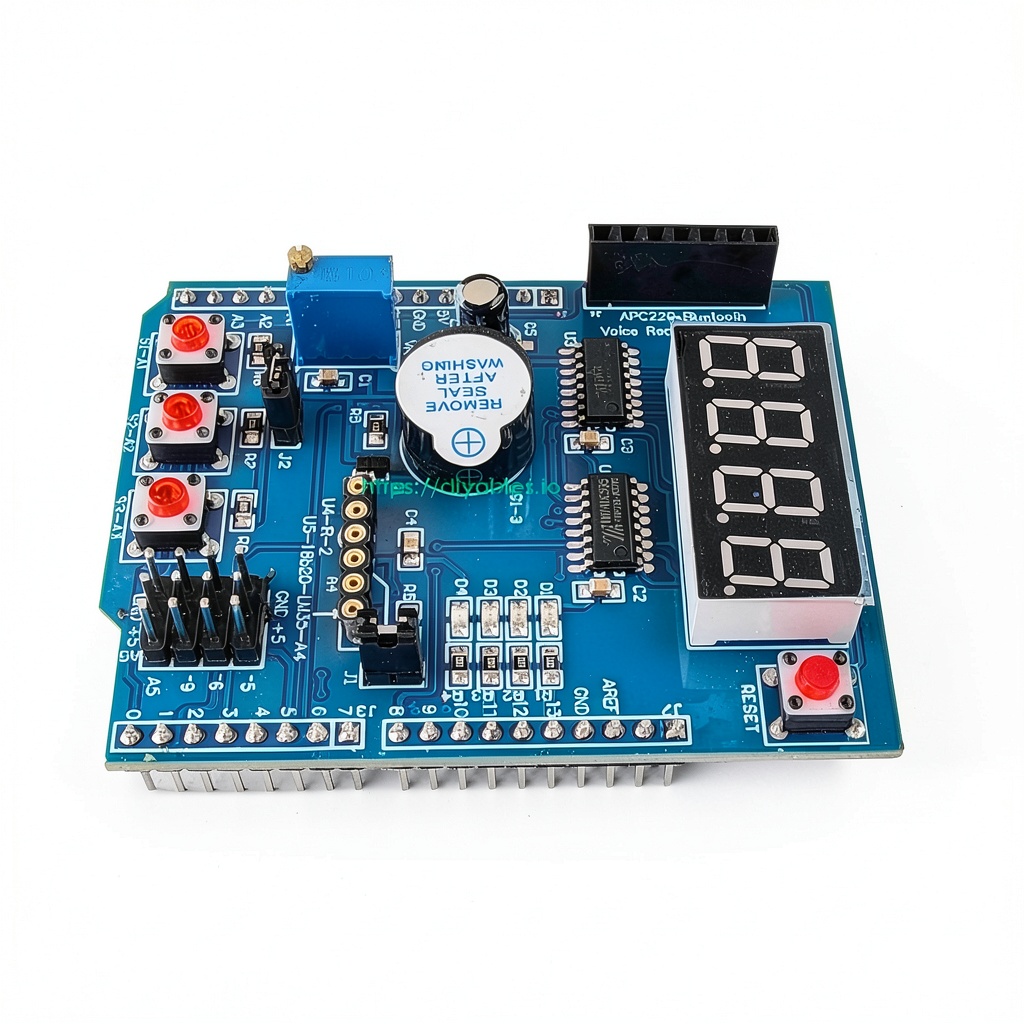
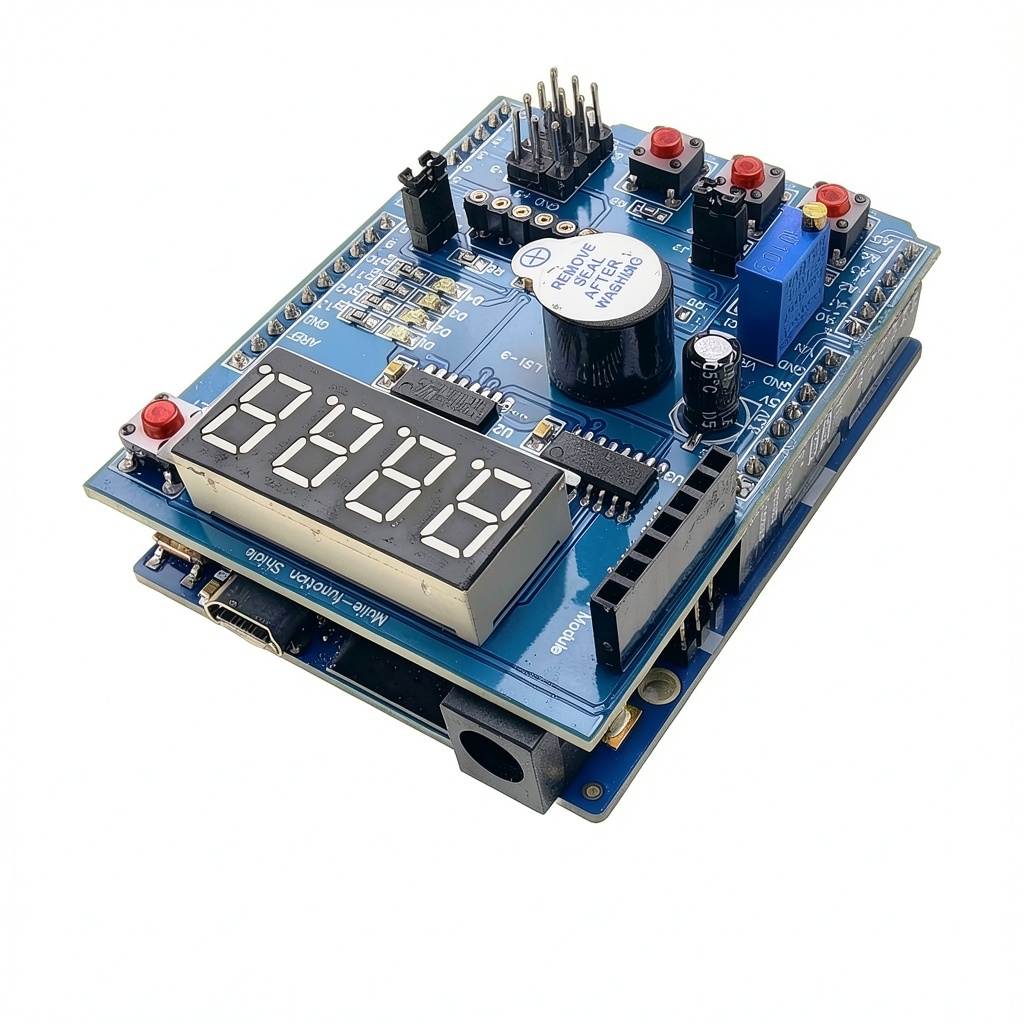
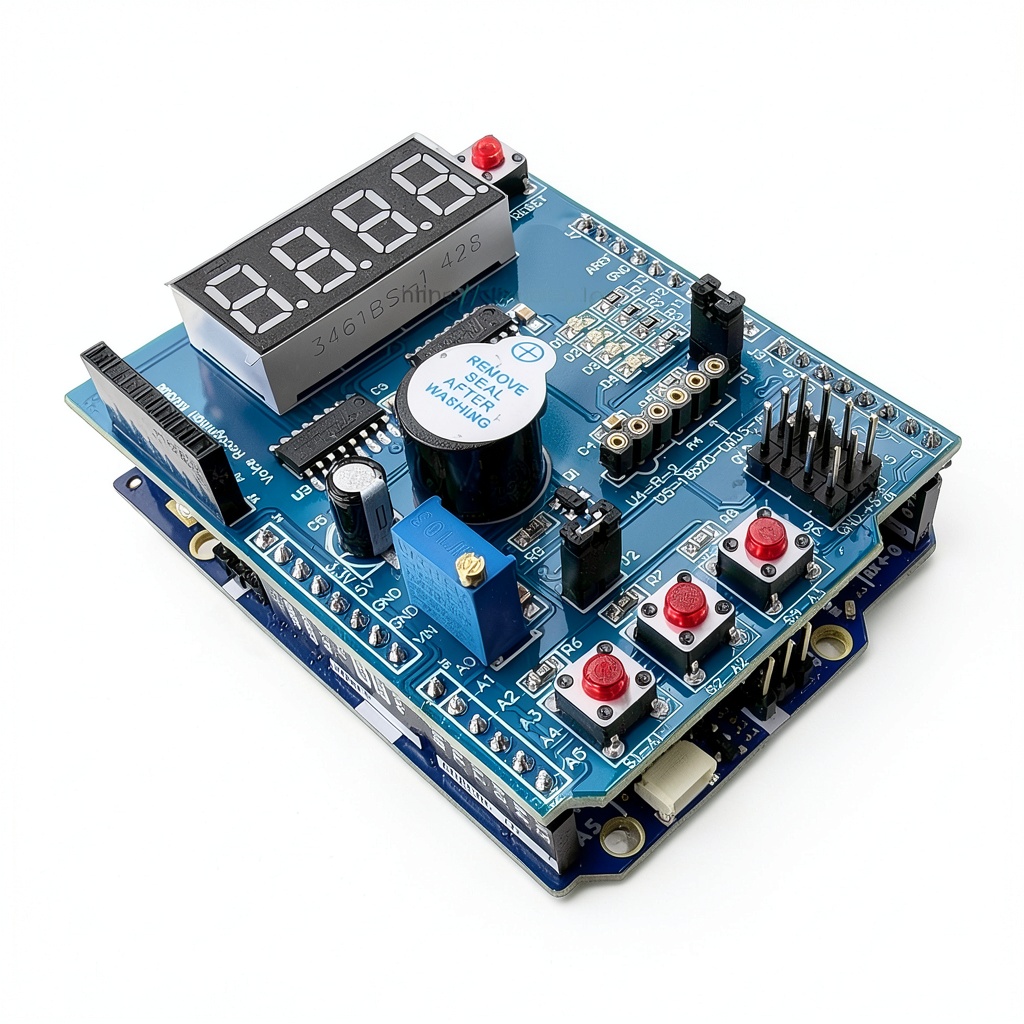
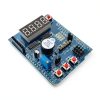
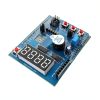
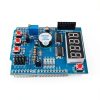
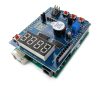
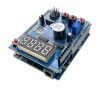
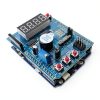
The DIYables Multi Function Shield is engineered to transform a standard Arduino Uno or Mega into a versatile development platform. Built with a high‑visibility 4‑digit 7‑segment LED display, the shield provides immediate visual feedback for numeric data, timers, and status codes. Surface‑mount LEDs and tactile push buttons are strategically placed for intuitive user interaction, while a precision potentiometer offers fine‑grained voltage control essential for sensor calibration and analog signal testing. Integrated piezo buzzer delivers audible alerts, and dedicated sensor ports support a wide range of modules, from temperature probes to motion detectors. The shield’s compact footprint (4.8 × 3.19 × 1.26 in) and lightweight design (1.76 oz) ensure it fits neatly within prototype enclosures without compromising performance.
Manufactured by DIYables, a reputable name in maker‑focused hardware, the shield adheres to strict quality standards. Each unit undergoes functional testing to verify LED illumination, button responsiveness, potentiometer accuracy, and buzzer tone consistency. The board’s layout follows industry‑approved spacing guidelines, reducing the risk of short circuits and easing soldering for users who wish to customize or expand the design. With a price point of $6.99, it offers an affordable entry into complex project development while maintaining the reliability expected from a top‑ranked product in the Potentiometers category.
![[Product front view showing all components]](https://www.dessertfirst.store/wp-content/uploads/2026/08/f86d318fa1dc4e7c83a3852f58a9ac77.jpg)
Usage
Designed for both educational environments and hobbyist workshops, this shield excels in a variety of scenarios. In classroom settings, instructors can demonstrate real‑time data acquisition by connecting temperature or light sensors to the dedicated ports, then displaying the readings on the 7‑segment display. The built‑in buzzer can signal threshold breaches, reinforcing concepts of event‑driven programming. For robotics enthusiasts, the shield serves as a central hub for motor driver modules, ultrasonic distance sensors, and encoder feedback, enabling precise control loops without the need for multiple external boards.
DIY hobbyists building IoT devices will appreciate the shield’s ability to interface with wireless modules such as ESP8266 or LoRa transceivers, using the potentiometer to fine‑tune signal strength or power consumption. The push buttons can act as manual overrides or mode selectors, while the LEDs provide status indicators for connectivity, battery level, or error states. Because the shield is compatible with both Arduino Uno R3/R4 and Mega, developers can scale their projects from simple prototypes to more complex multi‑tasking applications without redesigning the hardware interface.
Why Choose Us
DIYables stands out for its commitment to open‑source principles and community support. Every shield is accompanied by comprehensive documentation, including wiring diagrams, example sketches, and troubleshooting guides, all freely available on the company’s website. The design files are open source, allowing users to modify the layout or integrate additional components to suit specialized needs. Quality assurance is reinforced by a rigorous testing protocol that checks each LED, button, potentiometer, and buzzer for functional integrity before shipment.
Beyond the hardware, DIYables offers responsive technical support through forums, email, and live chat. Customers can expect prompt assistance with firmware integration, sensor compatibility, or any assembly questions. The company also provides a one‑year limited warranty, underscoring confidence in the durability of the shield’s solder‑mask, copper traces, and component mounting. By choosing this shield, users gain not only a reliable piece of hardware but also access to a vibrant ecosystem of makers, educators, and engineers.
Key Features
- Instant numeric readout with a bright 4‑digit 7‑segment LED display for clear data visualization.
- Precision potentiometer enables fine voltage adjustments, ideal for sensor tuning and analog experiments.
- Built‑in piezo buzzer provides audible feedback, enhancing interactive project experiences.
- Multiple sensor interfaces allow seamless connection of temperature, motion, and environmental modules.
- Dedicated customer support and one‑year warranty ensure reliable after‑sales service.
FAQ
Is this shield compatible with Arduino Mega 2560?
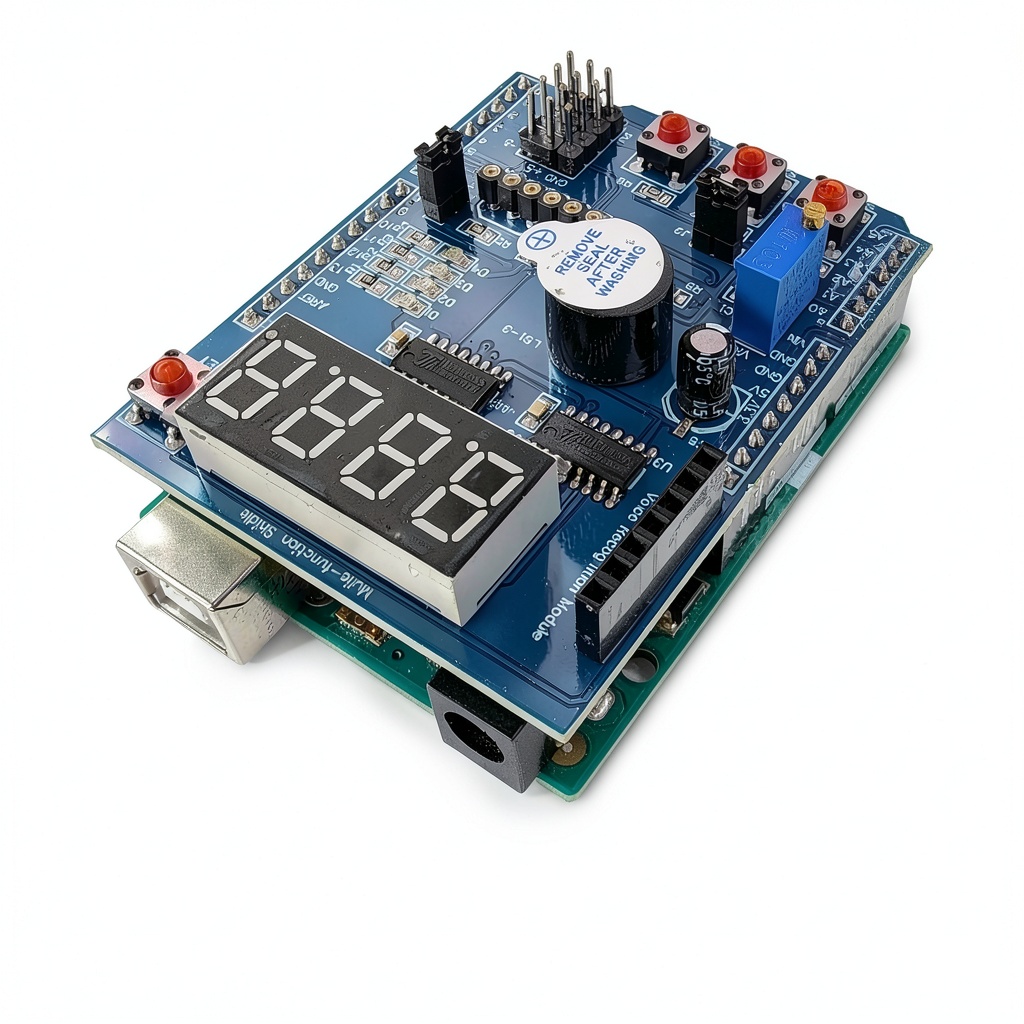
Yes, the shield is designed to fit both Arduino Uno R3/R4 and Arduino Mega 2560, providing full access to all pins and functions on each board.
Can I use the potentiometer for PWM control?
The potentiometer outputs an analog voltage that can be read by the Arduino’s ADC. While it is not a PWM output itself, you can use its reading to adjust PWM signals in your code.
What type of sensors can be connected to the sensor ports?
The sensor ports support a wide range of analog and digital sensors, including temperature probes, light sensors, ultrasonic distance modules, and custom I2C devices.
Do I need to solder any components?
No additional soldering is required for basic operation. All components are pre‑mounted, and the shield plugs directly into the Arduino headers.
Is there documentation for example projects?
DIYables provides detailed tutorials and example sketches on their website, covering projects such as digital clocks, sensor dashboards, and simple robotics applications.
 Israel's Forgotten Heroes: A Historical Middle East Biography by
Reviews
There are no reviews yet.